Why part identification is now a production and commercial issue
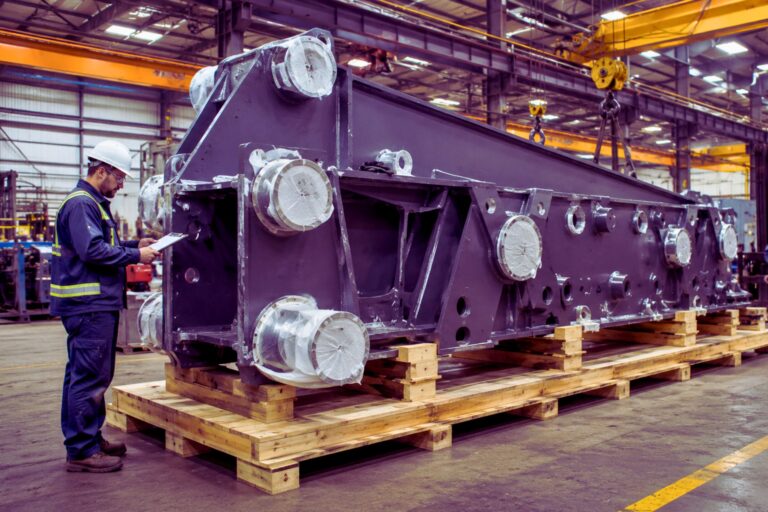
In heavy fabrication, traceability breaks most often at a simple point: the part cannot be identified reliably after cutting, blasting, welding, painting, transport, or rework. When that happens, material certificates, inspection records, and process logs become harder to trust, and containment takes longer.
ISO 9001 treats identification and traceability as an operational requirement when needed to ensure conformity, which is why many OEMs and Tier suppliers increasingly expect suppliers to implement robust identification practices, not ad-hoc labeling. (davidbarker.consulting)
1) Choose the right identification level first
Before choosing a marking method, decide what must be uniquely identified:
- Batch-level: material heat/batch for plates, profiles, and tubes
- Work-order-level: routing and process history per job
- Serial-level: unique identification per finished component or subassembly
- Joint-level (selected cases): weld traceability tied to a specific seam, repair loop, or inspection point
Rule of thumb: go as granular as your customer acceptance process requires, and no more. Over-identification creates overhead and failure modes.
2) Practical identification options and where each one wins
Below is a pragmatic view of what works in heavy fabrication environments.
2.1 Temporary tags and labels (fast, flexible, limited permanence)
Best for: internal flow control, WIP tracking, kitting, short-cycle operations
Typical formats: printed labels, laminated tags, hang tags, magnetic tags
Strengths
- Fast deployment and low cost
- Works well for WIP and internal logistics
Limitations
- Vulnerable to heat, abrasion, blasting, and paint
- Higher risk of detachment and mis-association
Use it when: you need speed and internal visibility, but do not rely on it for final traceability.
2.2 Stamping and dot peen (high durability, surface dependent)
Best for: steel components where deformation risk is manageable
Typical formats: alphanumeric ID, 2D Data Matrix (dot peen), stamped plates welded to the structure
Strengths
- Very durable through harsh environments
- Does not rely on adhesives
Limitations
- Can create stress risers or deformation in thin sections
- Readability depends on surface finish and scanner setup
Use it when: permanence matters and the geometry and material thickness can support it safely.
2.3 Laser marking (high precision, good for 2D codes, requires access and process control)
Best for: stainless steel, machined surfaces, plates, prepared marking zones
Typical formats: Data Matrix, QR, alphanumeric, logos, compliance marks
Strengths
- High precision and consistency
- Excellent for 2D codes and compact marking
Limitations
- Requires line-of-sight access and controlled marking settings
- Some finishes, coatings, or post-processes can reduce contrast
Use it when: you need a high-quality machine-readable mark and can control the marking surface.
2.4 Weld-on ID plates (simple, robust, often underestimated)
Best for: large weldments, painted structures, products exposed to abrasion
Typical formats: stamped plate, dot-peened plate, or laser-marked plate welded to a designated zone
Strengths
- Reliable even after paint and blasting
- Works well when marking the base material is impractical
Limitations
- Must be integrated into design to avoid interference
- Requires a controlled location and consistent practice
Use it when: the assembly lifecycle is harsh and the ID must remain readable to the end customer.
2.5 Chemical etch and electrolytic marking (niche but effective)
Best for: stainless steel, controlled surfaces, moderate durability requirements
Strengths: low heat input, minimal deformation risk
Limitations: lower durability in severe abrasion scenarios
3) QR vs Data Matrix: what to use on parts
For industrial direct part marking (DPM), Data Matrix ECC200 is often the practical default because it performs well in small sizes and challenging conditions, and it has a clear standard base in ISO/IEC 16022. (cdn.standards.iteh.ai)
QR is also standardized (ISO/IEC 18004), and it is excellent for consumer-facing use cases, but it can be physically larger for the same payload in many industrial applications. (iso.org)
Practical recommendation
- Use Data Matrix for most metal components, weldments, subassemblies, and shop-floor scanning. (cdn.standards.iteh.ai)
- Use QR when you want human-visible scanning with phones for service documentation, manuals, or field workflows, and size is not constrained. (iso.org)
4) Mark quality matters as much as the symbol type
A code that exists but cannot be read consistently is worse than no code because it creates false confidence. Two standards are useful anchors here:
- ISO/IEC 15415: methods for measuring and grading 2D symbol quality (including matrix symbols). (iso.org)
- ISO/IEC 29158: DPM-focused quality assessment, developed specifically for direct marked parts. (iso.org)
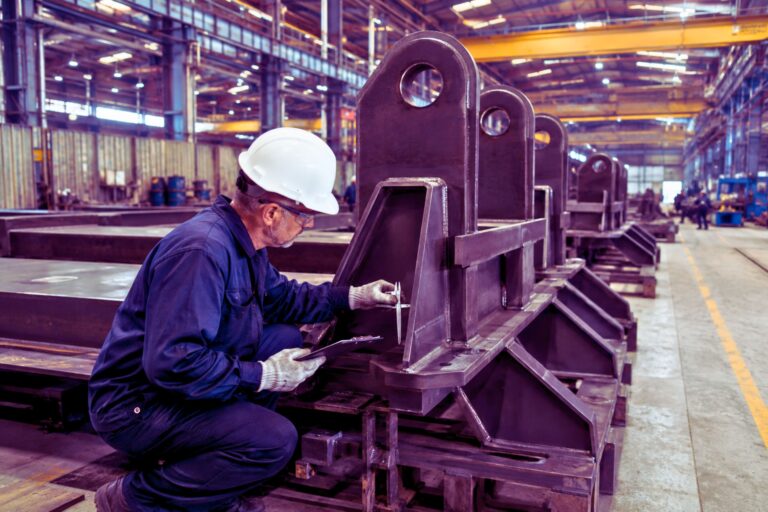
Operational takeaway: if you implement 2D codes, define a minimum acceptable grade for your environment and verify it periodically, especially after changes in surface prep, coating, lighting, or scanners.
5) A practical decision framework for heavy fabrication
Use these criteria to pick the marking method per product family:
5.1 Environment severity
- Heat exposure, abrasion, blasting, paint, chemical exposure, outdoor storage
5.2 Lifecycle access
- Will the ID need to be read after assembly, painting, or installation?
5.3 Surface and geometry
- Curvature, weld spatter risk, available flat zones, thickness constraints
5.4 Readability workflow
- Who will scan it: production, QA, logistics, customer, service team?
- What devices: handheld scanners, fixed readers, phones?
5.5 Data payload discipline
- Keep the payload minimal: unique ID + optional batch reference
- Store details in your system; do not attempt to encode everything in the symbol
6) Implementation roadmap that avoids common failures
Phase 1: Stabilize identification
- Define where the ID goes on each product family
- Define when it is applied (after cutting, after fit-up, after welding, after paint)
- Define ownership (who applies it, who checks it, who repairs it)
Phase 2: Make it auditable
- Link part ID to material batch/heat and inspection records
- Introduce a simple evidence pack: ID, certificate references, inspection results
Phase 3: Scale to customer-ready digital traceability
- Add 2D codes where they reduce friction and improve scanning reliability
- Introduce periodic verification based on ISO/IEC 15415 and, for DPM, ISO/IEC 29158 principles (iso.org)
Next steps
If you are preparing an RFQ, supplier qualification, or a new program involving fabricated and welded assemblies, a robust part identification strategy is one of the fastest ways to reduce rework, shorten containment cycles, and speed up acceptance.
To discuss part identification options for your components, including durable marking approaches suitable for heavy fabrication workflows, contact SL Industries at +359 (82) 841345 or info@sl-industries.com.
Sources (selected)
- ISO: QR Code symbology standard (ISO/IEC 18004). (iso.org)
- ISO/IEC 16022: Data Matrix standard (foundation for many industrial DPM use cases). (cdn.standards.iteh.ai)
- GS1 DataMatrix Guideline (industrial applications and structured encoding guidance). (gs1.org)
- ISO: 2D symbol quality grading (ISO/IEC 15415) and DPM-focused grading (ISO/IEC 29158). (iso.org)
- ISO 9001 Clause 8.5.2 overview (identification and traceability expectations). (davidbarker.consulting)