Why the transition from welding to machining deserves careful control
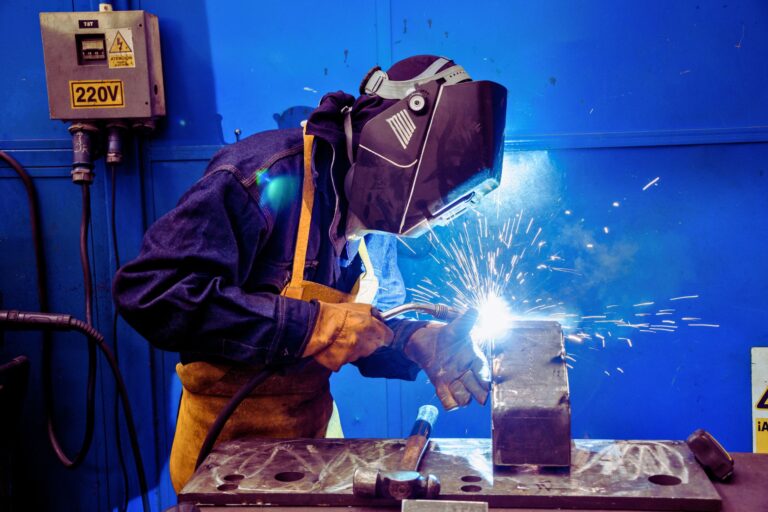
In heavy fabrication, welding and machining are often treated as separate production stages. In practice, they are closely connected. The quality of a machined interface depends heavily on what happened earlier during cutting, fit-up, welding, restraint, inspection, and handling. If the welded structure is not controlled properly before machining begins, even advanced machining capability may not fully compensate for accumulated errors.
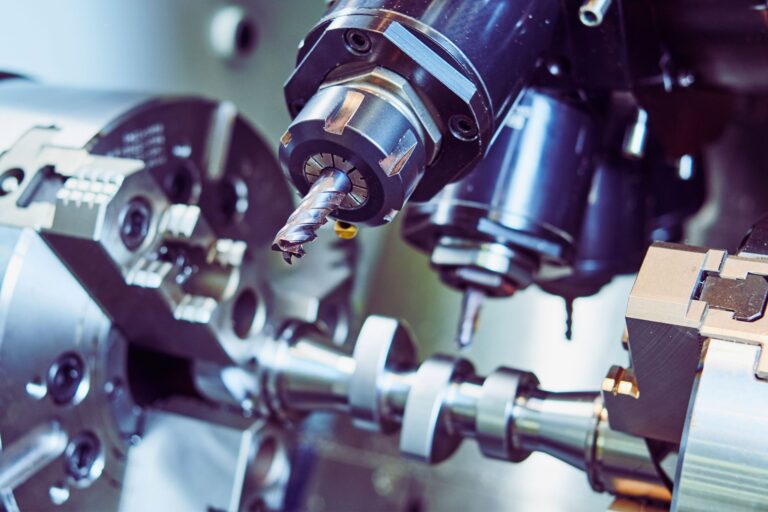
This is especially important for large welded components, equipment frames, crane-related parts, construction machinery structures, and industrial assemblies where machined surfaces, bores, mounting faces, and alignment features must support later assembly or operational performance. In these cases, machining is not simply a finishing step. It is the stage where earlier fabrication discipline becomes visible.
1) What machined interfaces mean in fabricated structures
Machined interfaces are the surfaces, holes, bores, slots, mounting areas, or reference features that allow a fabricated component to connect accurately with another part, assembly, or system. They may be used for bolted connections, bearing seats, hydraulic components, rotating parts, guide systems, lifting structures, or precision alignment during final assembly.
In heavy fabrication, these interfaces often need to meet tighter requirements than the surrounding welded structure. While some areas of a fabrication may allow broader tolerances, machined interfaces usually require more precise control of:
- flatness
- perpendicularity
- parallelism
- hole position
- bore alignment
- surface finish
- datum relationships
- assembly fit
This is why the quality of these interfaces cannot be considered only during machining. They must be protected from the beginning of the fabrication process.
2) Why fabrication decisions affect machining outcomes
Before machining starts, many important conditions have already been set. Material selection, cutting accuracy, fit-up, weld sequence, distortion control, temporary restraints, and handling all influence whether the component reaches the machine in a condition that can be processed efficiently and reliably.
If the fabrication stage is not controlled, machining may face practical problems such as:
- insufficient machining allowance
- unstable or distorted geometry
- misaligned features
- poor datum availability
- excessive setup time
- unexpected material removal
- difficulty achieving required tolerances
- risk of scrapping or reworking a high-value component
For small parts, some of these issues may be easier to correct. For large welded structures, correction is usually more expensive, slower, and more disruptive. The size and weight of the component make handling more difficult, while the value already invested in the part increases the cost of any mistake.
3) The role of datum strategy
A reliable machining result depends on clear datums. Datums define how a part is positioned, measured, and machined. If the datum strategy is unclear or inconsistent, the finished component may meet local dimensions but still fail in assembly.
In welded fabrications, datum strategy can be complicated because the structure may move during welding. Surfaces that look suitable for reference may no longer reflect the intended geometry after distortion, stress release, or handling.
A strong approach usually considers:
- which features will be used for setup
- which surfaces or points are functionally critical
- how welding movement may affect reference areas
- whether temporary or sacrificial stock is needed
- how inspection will confirm machining readiness
- how final dimensions relate to assembly requirements
This planning helps avoid a common problem: machining a part accurately from the wrong reference.
4) Machining allowance must be protected during fabrication
Machining allowance is the extra material left on a component so that critical surfaces can be brought to final dimensions during machining. In welded fabrication, allowance is a practical safeguard against distortion, cutting variation, weld shrinkage, and handling effects.
However, allowance only works if it is planned and protected. If welding movement, poor fit-up, or inaccurate pre-machining inspection reduces available stock in critical areas, machining options become limited.
Problems may occur when:
- allowance is too small for the expected movement
- weld distortion pulls the part away from the intended machining envelope
- surfaces are not checked before machining
- drawing requirements are interpreted differently by fabrication and machining teams
- the need for final machining is not fully considered during fit-up
This is why machining allowance should be treated as part of fabrication planning, not only as a drawing note.
5) Distortion control and machining readiness are connected
Distortion control is one of the strongest links between welding and machining. A fabricated structure may still be weld-compliant, but if it has moved outside the machining strategy, the next operation becomes more difficult.
Distortion can affect machining in several ways:
- datums may shift
- bores may lose alignment
- mounting faces may no longer have enough stock
- setups may become unstable
- machining time may increase
- final assembly may require compensation or rework
The goal is not to eliminate all movement, which is unrealistic in many welded structures. The goal is to anticipate likely movement and manage it before it compromises critical interfaces. This requires coordination between welding, quality, and machining before production starts.
6) Why pre-machining inspection is essential
Pre-machining inspection is one of the most valuable control points in large fabricated components. It verifies whether the part is ready to enter machining and whether critical areas remain within the expected condition.
A practical pre-machining check may include:
- confirmation of key dimensions
- review of datum areas
- verification of machining allowances
- inspection of critical interfaces
- confirmation of drawing revision
- review of weld completion and repair status
- assessment of distortion-sensitive areas
- documentation of deviations before machining starts
This checkpoint helps prevent value from being added to a part that is not ready. It also gives teams the opportunity to correct or escalate issues before machining time, tooling, and setup effort are committed.
7) Common failure points between fabrication and machining
Problems between welded fabrication and machining often come from gaps in coordination rather than lack of technical ability. Each department may do its own work correctly, but if the handover is weak, the final result can still be affected.
Common weak points include:
- unclear communication of critical interfaces
- insufficient review of machining requirements before welding
- lack of shared understanding of datums
- missing or incomplete pre-machining inspection
- uncontrolled distortion before machining
- unclear ownership of deviations
- outdated drawings or revision mismatches
- machining teams discovering fabrication issues too late
These issues are avoidable when fabrication and machining are treated as connected stages within one controlled process.
8) What OEMs expect from suppliers handling both fabrication and machining
OEMs value suppliers that understand how upstream fabrication decisions affect downstream precision. When a supplier is responsible for both welded structures and machined interfaces, customers often expect more than separate competence in each operation. They expect integrated control.
That typically means confidence that the supplier can:
- understand functional interfaces
- control welding sequence and distortion risk
- protect machining allowances
- verify readiness before machining
- maintain drawing and revision discipline
- inspect critical dimensions at meaningful stages
- document deviations clearly
- communicate technical risks early
For OEMs, this reduces uncertainty. A supplier that can manage both fabrication and machining as a connected workflow is better positioned to support complex industrial components, repeat work, and higher-value assemblies.
9) Practical ways to improve control across the workflow
Improving the transition from welded fabrication to machining does not always require major system changes. Many improvements come from better planning, clearer handover points, and stronger communication between teams.
Practical measures may include:
- reviewing machining requirements before fabrication starts
- identifying critical interfaces during job planning
- defining datum strategy early
- confirming machining allowance in risk-sensitive areas
- planning weld sequence with downstream machining in mind
- introducing pre-machining inspection checkpoints
- linking inspection records to job documentation
- documenting deviations before the part moves to machining
- reviewing recurring issues from similar components
The most effective approach is usually preventive. It is better to identify risk before welding and machining than to solve it after a high-value component has already moved too far through production.
A practical conclusion
In heavy fabrication, machined interfaces depend on much more than the machining operation itself. They are shaped by the entire production path: cutting, fit-up, welding, distortion control, inspection, handling, and documentation. When these stages are managed as one connected workflow, the final component is more likely to meet dimensional, functional, and assembly requirements.
For OEMs, this kind of control is a sign of supplier maturity. It shows that the fabrication partner understands not only how to produce a welded structure, but also how to protect the precision features that make the component usable in a larger system.
At SL Industries, we focus on practical manufacturing discipline across welding, fabrication, machining, inspection, and production coordination to support consistent quality and reliable execution in demanding industrial projects.
E-mail: info@sl-industries.com