Why supplier qualification matters more than ever
Choosing a heavy fabrication supplier is rarely just a procurement decision. For OEMs, it is a question of production risk, delivery reliability, quality control, and long-term operational stability. When fabricated components are large, welding-intensive, tolerance-sensitive, or integrated into higher-value assemblies, supplier qualification becomes a direct part of project risk management.
This is one reason why OEMs no longer assess heavy fabrication partners mainly on price, machine capacity, or a strong-looking presentation. They want evidence that the supplier can operate with control, repeatability, and discipline under real production conditions. In practice, they are not only asking whether a supplier can produce a part, but whether it can do so consistently, document the work properly, and respond effectively when complexity increases.
1) What supplier qualification really means in heavy fabrication
In industrial manufacturing, supplier qualification is the structured evaluation of whether a fabrication partner can meet technical, operational, quality, and commercial requirements on a repeatable basis. In heavy fabrication, this goes far beyond filling out a vendor form or submitting a capability brochure.
OEMs usually look at a broader combination of factors, such as:
- welding process control
- material traceability
- dimensional inspection capability
- document and revision control
- quality records and nonconformance handling
- production planning discipline
- subcontractor coordination
- packaging and logistics readiness
- technical communication during quotation and execution
A supplier may have strong equipment and skilled personnel, but OEMs also want to see whether the underlying system is stable. A capable workshop without controlled processes can still become a source of delays, quality escapes, and costly rework.
2) Why OEMs are evaluating suppliers more rigorously
The cost of supplier failure in heavy fabrication is often discovered late. A welding issue, geometric deviation, or documentation gap may not become visible until machining, coating, assembly, inspection, or customer review is already underway. At that stage, correction is slower, more expensive, and more disruptive.
OEMs are also under increasing pressure from their own customers to maintain stronger traceability, better production visibility, and more reliable delivery performance. This makes supplier qualification not just a compliance exercise, but an operational safeguard.
The scrutiny is usually higher when components are:
- large and difficult to rework
- customer-specific or engineered-to-order
- subject to inspection hold points or witness points
- linked to safety, durability, or demanding service conditions
- produced in low-to-medium volumes with frequent variation
In these cases, supplier control matters as much as fabrication capacity.
3) What OEMs typically look for in a heavy fabrication partner
Welding control and execution discipline
For OEMs, welding quality is not judged only by the final appearance of the weld. They want confidence that welding is managed as a controlled production process. This includes appropriate procedures, qualified personnel where required, control of consumables and materials, and a clear approach to inspection and acceptance.
Weak fit-up discipline, poor sequence control, or inconsistent handling of heat input can create defects that are difficult and expensive to correct later. That is why OEMs pay attention not only to welding capability, but to how welding is organized and verified.
Material traceability and part identification
Traceability remains one of the most important qualification checkpoints in fabrication supply chains. OEMs want to know whether the supplier can reliably link incoming material, job documentation, inspection records, and the finished component.
This does not always require advanced software. In many cases, what matters most is clarity, consistency, and retention of records. If a deviation appears later, the supplier must be able to identify what material was used, where it went, and what controls were applied.
Dimensional inspection capability
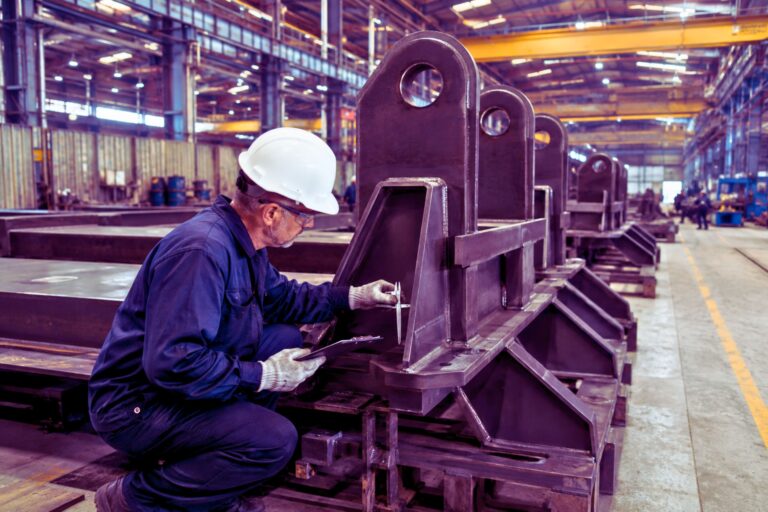
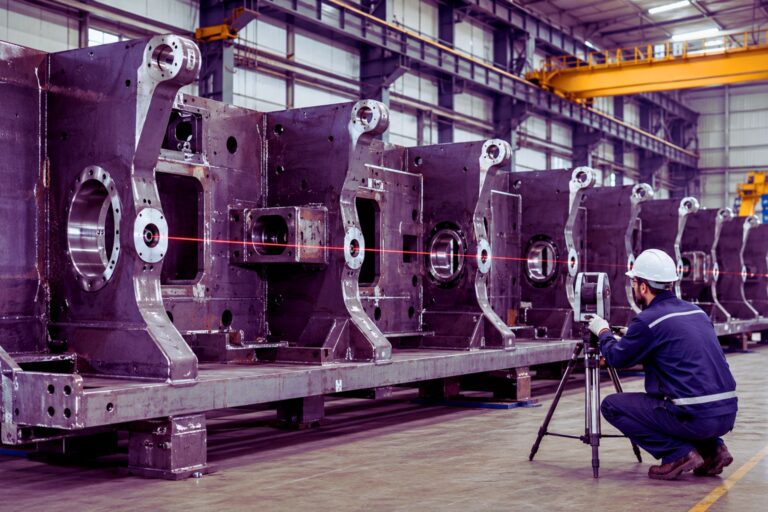
Heavy fabrication brings recurring challenges related to distortion, datum control, fit-up, and tolerance management. OEMs therefore assess whether the supplier has a realistic inspection approach that reflects the complexity of the part.
They often look for:
- clear checkpoints before and after critical operations
- suitable measuring tools and methods
- practical control of critical interfaces and hole patterns
- defined handling of out-of-tolerance conditions
- evidence that issues are detected before final release
End-of-line inspection alone is rarely enough for demanding fabrication work. OEMs prefer suppliers that build verification into the process rather than leaving it until the end.
Documentation and revision control
A surprising number of manufacturing failures are caused not by weak fabrication skills, but by weak control of information. Outdated drawings, unclear revisions, missing weld maps, or poor communication of specification changes can quickly compromise an otherwise capable supplier.
OEMs want to see that the supplier can control current documents, communicate updates clearly, and prevent obsolete information from reaching production. This is especially important in project-based work where drawings and requirements may change during execution.
Production planning and delivery realism
Qualification also depends on whether the supplier can translate technical requirements into a realistic production plan. A fabrication partner may be technically capable, but still create commercial risk if production sequencing, external operations, or workload planning are poorly managed.
OEMs usually value:
- realistic lead times
- visibility into work-in-progress
- early communication of risks
- controlled coordination between fabrication, machining, finishing, and dispatch
- stable performance under changing priorities
In many supplier relationships, predictability matters more than optimism.
4) How qualification judgments are often made in practice
Formal audits, checklists, and questionnaires are important, but qualification decisions are often shaped by day-to-day interaction. OEMs usually form strong views during the quotation stage, technical clarifications, first project discussions, or the handling of early issues.
A heavy fabrication supplier tends to create confidence when it:
- asks relevant technical questions early
- identifies risks before production starts
- gives realistic answers rather than vague promises
- responds quickly to drawing ambiguities
- documents deviations clearly
- communicates in a structured and professional manner
This is often where weaker suppliers become visible. A polished capability statement may look convincing, but inconsistent communication and unclear follow-through usually undermine confidence very quickly.
5) Common failure points that weaken qualification readiness
OEMs frequently reject or downgrade suppliers for reasons that are avoidable. In many cases, the problem is not the lack of machines or experience, but the lack of process discipline.
Typical warning signs include:
- unclear ownership of inspection and quality activities
- weak visibility into material status or job progress
- reactive handling of nonconformities
- incomplete or inconsistent production records
- overdependence on individual know-how instead of defined processes
- poor coordination across departments or subcontractors
- claims of capability that are not supported by practical evidence
From the OEM perspective, the question is not whether a supplier can start a job. The question is whether it can remain reliable when the job becomes more demanding.
6) How suppliers can strengthen their qualification position
Improving qualification readiness does not always require major investment. In many cases, the biggest improvements come from better control of existing operations.
Practical steps may include:
- defining inspection checkpoints for critical stages
- improving routing or traveler discipline
- strengthening revision control on the shop floor
- standardizing traceability records
- documenting recurring deviations and corrective actions
- aligning quotation, engineering, production, and quality teams earlier
- reviewing whether internal controls truly match customer expectations
Suppliers that demonstrate structure, consistency, and transparency are often more attractive to OEMs than suppliers that simply claim broad capability.
7) Why this matters commercially, not only technically
Supplier qualification has a direct commercial impact. A fabrication partner that inspires confidence is more likely to receive repeat work, more complex assemblies, tighter collaboration, and earlier involvement in new projects.
For OEMs, trusted suppliers reduce coordination costs, lower the risk of disruption, and make production planning more stable. For heavy fabrication companies, this means qualification readiness is not just a quality topic. It is part of competitive positioning and long-term customer development.
A practical conclusion
OEMs do not qualify heavy fabrication suppliers simply to complete a formal process. They do it to reduce risk across production, quality, delivery, and customer performance. The suppliers that stand out are usually those that combine technical capability with process control, traceability, inspection discipline, and realistic communication.
At SL Industries, we focus on practical manufacturing discipline that supports controlled execution, consistent quality, and stronger confidence in demanding fabrication projects.
E-mail: info@sl-industries.com