Why distortion remains one of the most persistent fabrication risks
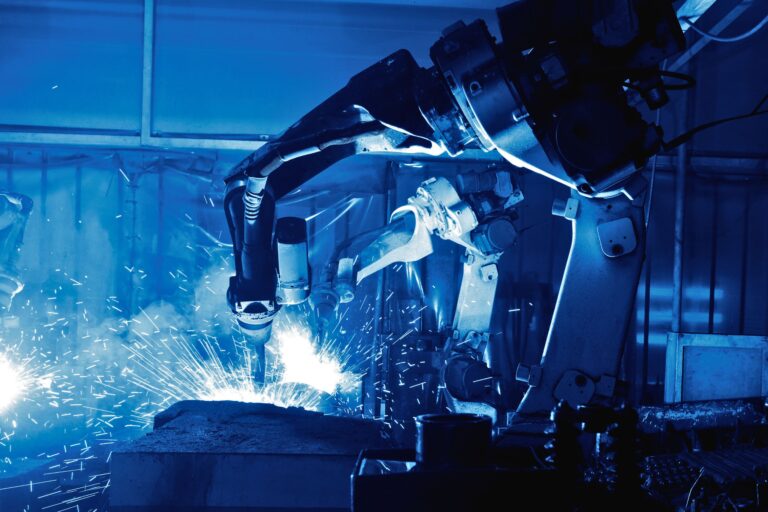
In welded fabrication, many problems do not begin with a visible defect. They begin with movement. Heat input, restraint conditions, joint design, welding sequence, and part geometry all influence how a structure behaves during production. When that behavior is not anticipated, distortion can affect dimensions, fit-up, machining allowance, assembly interfaces, and overall delivery reliability.
That is why distortion control matters so much in heavy fabrication. It is not simply a welding issue. It is a planning issue that affects quality, cost, schedule, and downstream operations. In demanding industrial projects, distortion is often easier to prevent through preparation than to correct after welding is complete.
1) What distortion means in welded fabrication
Distortion is the unwanted change in shape, alignment, or dimensions caused by uneven heating and cooling during welding and related thermal processes. As material expands and contracts, internal stresses develop. If those forces are not balanced or controlled, the component may bend, twist, shrink, pull out of alignment, or lose critical geometry.
In fabrication, distortion may appear as:
- angular movement
- longitudinal or transverse shrinkage
- bowing or camber
- twisting
- misalignment of interfaces
- loss of flatness or straightness
- dimensional drift across larger assemblies
Not every weldment is equally vulnerable. The risk depends on part geometry, thickness, joint arrangement, restraint method, weld volume, sequence, and tolerance requirements.
2) Why distortion becomes especially costly in heavy fabrication
Distortion is a challenge in many welded products, but in heavy fabrication the consequences are often more serious. Large structures, complex weldments, and customer-specific assemblies usually involve multiple process steps and tighter coordination between fabrication, inspection, machining, coating, and final assembly.
When distortion is discovered late, it can affect far more than the welded area itself. The impact may include:
- rework and straightening operations
- loss of dimensional conformity
- machining problems or insufficient stock
- assembly interference
- added inspection time
- schedule disruption
- higher handling cost
- reduced customer confidence
In some cases, distortion can also introduce uncertainty into root-cause analysis. Teams may see a dimensional problem at the end of production, but the real cause may lie in early fit-up, welding sequence, restraint strategy, or heat distribution decisions made much earlier.
3) Why planning before production matters more than correction afterward
Distortion is often treated as something to manage once it appears. In reality, the more effective approach is to reduce the risk before welding starts. Corrective actions after the fact are usually slower, less predictable, and more expensive than preventive planning.
Planning matters because many of the factors that influence distortion are decided before the first weld is made. These include:
- joint design
- weld size and location
- sequence of operations
- fixture and restraint approach
- tack welding strategy
- expected heat input
- machining stock allowances
- inspection checkpoints
- release of temporary restraints
Once welding is underway, options become narrower. If the structure begins to move in an unfavorable way, teams may be forced into reactive measures that increase labor and reduce schedule stability.
4) The main factors that influence distortion risk
Distortion rarely results from a single cause. It is usually the combined result of design conditions and production choices. Understanding the main drivers helps manufacturers control risk more effectively.
Part geometry and stiffness
Thin sections, asymmetrical shapes, open structures, and long unsupported spans are generally more sensitive to welding movement. Even in heavier fabrications, local flexibility in certain areas can create unexpected distortion if the structure does not resist thermal forces evenly.
Weld volume and heat distribution
Larger welds are not always better welds. Excessive weld metal increases heat input and shrinkage effects, especially when deposited in concentrated areas. Uneven heat distribution across the structure can also create directional pull that affects alignment and dimensional control.
Welding sequence
The order in which welds are made has a major effect on movement. Poor sequencing can cause distortion to accumulate in one direction or lock stresses into the structure. A more balanced sequence can help distribute shrinkage more evenly and reduce unwanted movement.
Fit-up and restraint
Good fit-up supports good control. If gaps, alignment, or part positioning are inconsistent before welding, distortion risk usually increases. Restraint methods also matter. Too little restraint may allow excessive movement, while poorly considered restraint can lock in stress or create release-related movement later.
Process transitions
Distortion risk is not limited to welding alone. It also affects transitions between fabrication and later operations such as machining, stress relief, blasting, coating, and assembly. A structure that appears acceptable after welding may still create downstream problems if movement has already reduced geometric stability.
5) Where manufacturers commonly lose control
In many fabrication environments, distortion problems do not arise because the risk is unknown. They arise because it is underestimated, discussed too late, or treated as a shop-floor issue rather than a cross-functional planning topic.
Common weak points include:
- assuming the structure will behave like previous jobs without confirming the risk
- releasing drawings without considering welding sequence implications
- inadequate fixture or restraint planning
- oversized welds relative to functional need
- weak control of fit-up before welding begins
- insufficient intermediate inspection during fabrication
- leaving machining considerations until too late
- relying on rework as a normal correction method
These weaknesses often remain hidden until a project reaches a critical stage. At that point, correction is possible, but usually at a much higher cost.
6) Practical ways to improve distortion control before welding starts
Strong distortion control does not always require complex simulation or a highly digital workflow. In many cases, meaningful improvement comes from disciplined planning, early coordination, and practical control of known risk factors.
Useful measures may include:
- reviewing distortion-sensitive geometry before release to production
- aligning engineering, welding, and inspection teams on critical risk areas
- defining welding sequence in advance for key assemblies
- checking whether weld size and placement are proportionate to actual functional need
- using fixtures or restraint methods suited to the structure
- confirming fit-up and alignment before major weld stages
- planning intermediate dimensional checks instead of relying only on final inspection
- protecting machining interfaces through allowance and pre-machining verification where needed
- documenting recurring distortion patterns to improve future jobs
The goal is not to eliminate all movement. The goal is to manage it in a predictable and controlled way.
7) What OEMs usually expect from a fabrication partner
OEMs understand that welded structures move. What they usually look for is not the unrealistic promise of zero distortion, but evidence that the supplier understands the risk and manages it systematically.
That typically means confidence that the fabrication partner can:
- recognize distortion-sensitive assemblies early
- plan welding and restraint with practical discipline
- inspect at meaningful stages
- protect critical interfaces and dimensions
- respond in a controlled way when movement exceeds expectations
- support production records and communication with clear evidence
For OEMs, this is closely tied to supplier reliability. A manufacturer that controls distortion well is more likely to support predictable assembly, fewer surprises, and stronger delivery performance.
8) Why distortion control also has commercial value
Although distortion is a technical issue, its consequences are commercial. A fabrication partner that repeatedly struggles with straightness, fit, or geometric stability creates downstream cost for the customer. That affects trust, repeat business, and willingness to award more complex work.
By contrast, stronger distortion control can help manufacturers:
- reduce rework and schedule disruption
- improve dimensional consistency
- support machining and assembly readiness
- strengthen inspection outcomes
- increase predictability across repeat jobs
- build credibility with OEM and industrial customers
In competitive fabrication markets, that matters. Consistent execution is often more valuable than broad claims of capability.
A practical conclusion
In welded structures, distortion is one of the most important risks to address before production begins. Once movement affects alignment, dimensions, or downstream operations, correction becomes more difficult and more expensive. That is why practical planning, disciplined fit-up, balanced welding sequence, and timely inspection are so important in fabrication.
At SL Industries, we focus on practical manufacturing discipline that improves repeatability, dimensional control, and customer confidence across demanding fabrication projects.
E-mail: info@sl-industries.com