Why documentation matters far beyond paperwork
In fabrication, quality is not judged only by the finished part. For OEMs, confidence also depends on the documentation behind it. A welded structure, machined component, or fabricated assembly may appear acceptable at delivery, but if the supporting records are incomplete, unclear, or inconsistent, the supplier still creates risk.
That is why fabrication documentation and production records matter so much. They help OEMs verify that the work was carried out as required, that controls were applied at the right stages, and that any deviations were handled in a structured way. In practical terms, good documentation supports traceability, simplifies reviews, reduces uncertainty, and improves supplier credibility.
In demanding industrial environments, documentation is not just a customer requirement. It is part of production control.
1) What fabrication documentation typically includes
Fabrication documentation covers the records, references, and controlled information used to plan, execute, inspect, and release manufactured parts or assemblies. The exact content depends on the project, customer, industry, and product complexity, but OEMs usually expect a supplier to manage documentation in a structured and retrievable way.
This may include:
- drawings and revision status
- bills of materials or part lists
- material certificates or material identification records
- routing or traveler documents
- weld maps or weld identification references
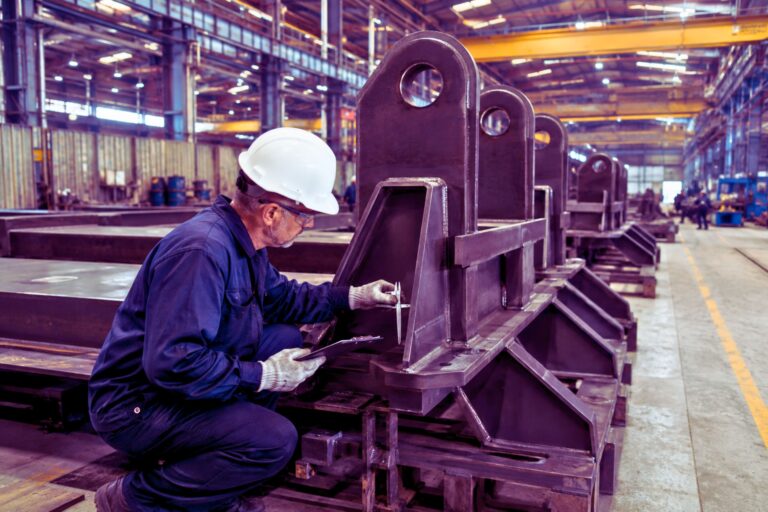
- inspection and measurement records
- nonconformance and deviation records
- repair or rework documentation
- surface treatment or finishing records where applicable
- final release or delivery documentation
Not every job requires the same level of formality. However, OEMs expect the documentation level to reflect the technical and commercial risk of the work being delivered.
2) Why OEMs place so much importance on production records
From an OEM perspective, production records are not only administrative evidence. They are a way to reduce uncertainty. They help answer practical questions about how a part was produced, what controls were applied, whether the correct revision was used, and how issues were handled if something changed during execution.
This matters because in fabrication, problems are often discovered after significant value has already been added. By the time a dimensional deviation, weld concern, or material question arises, the part may already be coated, machined, assembled, or shipped. Without reliable records, investigation becomes slower, wider in scope, and harder to manage.
OEMs therefore rely on documentation to support:
- traceability and accountability
- verification of process control
- review of inspection history
- confirmation of current revision use
- management of deviations and repairs
- audit readiness
- supplier performance evaluation over time
In this sense, production records are not only about proving that something was done. They are about showing that the work was controlled.
3) What OEMs usually expect to see
OEMs do not always ask for the same documents, but they usually expect consistency, clarity, and relevance. A large documentation package is not necessarily a strong one if it is difficult to navigate, incomplete, or disconnected from actual production events.
In most cases, OEMs expect the supplier to demonstrate several core capabilities.
Clear control of drawings and revisions
One of the most basic expectations is that the correct production information was used. If outdated drawings or shop-floor instructions remain in circulation, even a technically capable supplier can manufacture the wrong part correctly.
OEMs want confidence that:
- current drawings are clearly identified
- revision changes are communicated properly
- obsolete versions are removed from use
- special notes and customer requirements reach the right people
- production and inspection are aligned to the same revision baseline
Weak revision control is one of the most common sources of avoidable fabrication problems.
Traceable records linked to the job
OEMs also expect production records to be clearly linked to the relevant part, assembly, or order. Information should not exist only in isolated spreadsheets, individual notebooks, verbal handovers, or disconnected email chains.
A traceable documentation flow helps connect:
- materials to parts
- welds to procedures or weld references
- inspections to checkpoints
- deviations to corrective actions
- release decisions to supporting evidence
This does not always require advanced software. What matters more is whether the documentation system is coherent, consistent, and usable when questions arise.
Evidence of inspection and control
OEMs generally want more than a final statement that the part passed inspection. They want evidence that checks were performed at the appropriate stages and that the records support those checks.
Depending on the project, this may include:
- incoming material verification
- dimensional inspection during fabrication
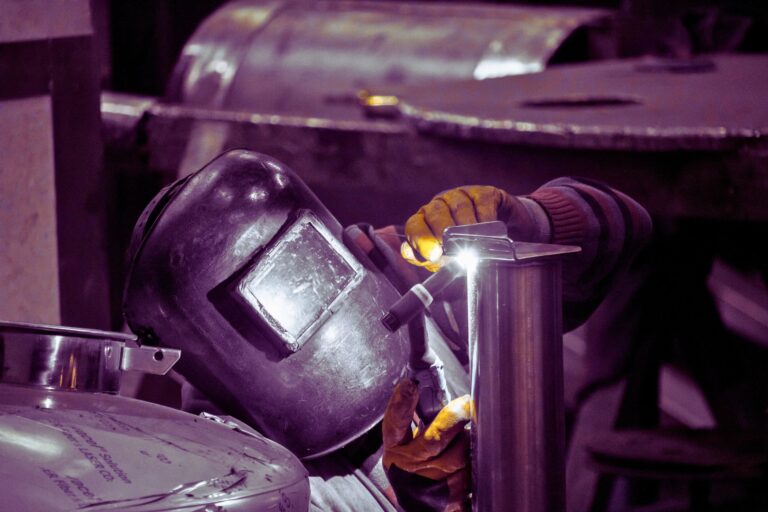
- weld inspection records
- fit-up verification
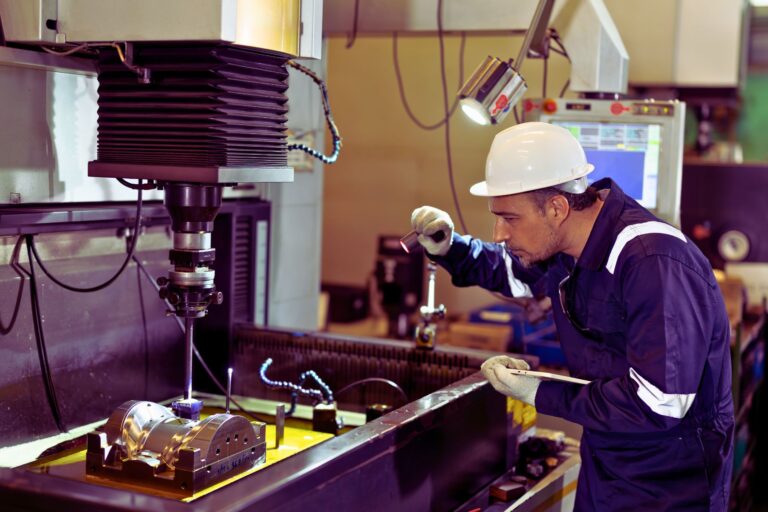
- pre-machining checks
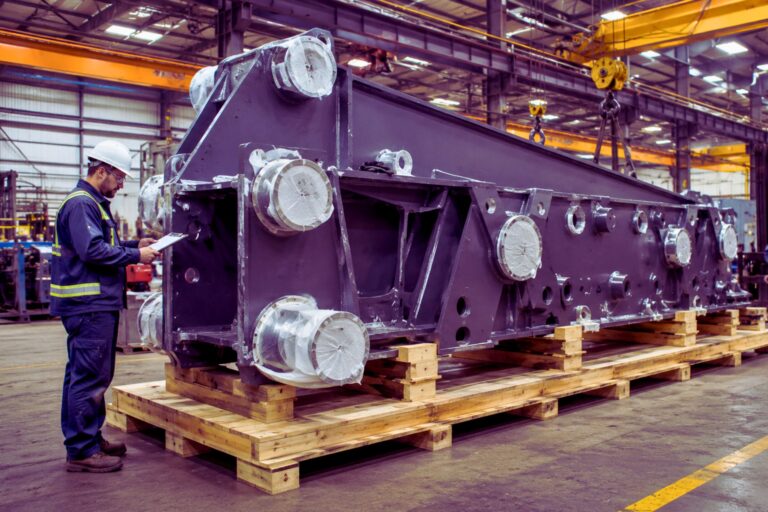
- final dimensional or visual inspection
- sign-off at defined control points
The important point is not the volume of records, but whether they show that critical risks were actively managed.
Structured handling of deviations
In real production, not every job runs exactly as planned. OEMs understand this. What matters is whether deviations, repairs, and nonconformities are identified, documented, assessed, and resolved in a controlled way.
A supplier creates more confidence when records show:
- what the issue was
- when it was identified
- who reviewed it
- what action was taken
- whether reinspection occurred
- whether customer approval was needed and obtained
Poorly documented deviations create doubt not only about the specific issue, but about the overall reliability of the supplier’s control system.
4) What weak documentation often looks like in practice
Documentation problems are not always dramatic. Often, they show up as small inconsistencies that become serious only when a review, audit, complaint, or production issue forces the team to reconstruct what happened.
Common weak points include:
- unclear or missing revision status
- incomplete inspection records
- difficulty linking material records to actual parts
- undocumented repairs or rework
- inconsistent naming or filing conventions
- records stored in multiple disconnected places
- handwritten notes that are difficult to interpret later
- release decisions not clearly supported by documented evidence
These issues may remain hidden while production flows smoothly. They become visible when a supplier is asked to prove control under pressure.
5) Why documentation quality influences commercial confidence
For OEMs, documentation is also part of supplier confidence. A supplier that delivers acceptable parts but struggles to provide clear records may still be viewed as a higher-risk partner than one with stronger documentation discipline.
This has a commercial effect. OEMs are often more willing to deepen cooperation with suppliers who can demonstrate:
- controlled execution
- consistent recordkeeping
- faster response to technical questions
- better readiness for audits and customer reviews
- lower uncertainty in problem investigation
- stronger support for repeat and higher-complexity work
In that sense, documentation does not only support compliance. It also supports trust.
6) Practical ways suppliers can strengthen documentation discipline
Improving fabrication documentation does not always require a major system change. In many cases, the most valuable improvements come from making records clearer, more consistent, and more closely linked to the production workflow.
Practical steps may include:
- tightening revision control at the shop-floor level
- standardizing traveler or routing documents
- linking inspection records directly to job identifiers
- using consistent naming and filing rules
- defining required records for each job type
- improving traceability between materials, welds, inspections, and release
- documenting repairs and deviations more systematically
- reviewing whether records can be retrieved quickly when needed
A simple system that is applied consistently is usually more effective than a complex system that is only partially followed.
7) What good documentation makes possible
When production records are controlled well, the benefits extend beyond customer documentation packages. Good documentation supports internal coordination, helps quality and production teams work with fewer assumptions, and makes recurring work more stable.
It also helps manufacturers:
- reduce time spent reconstructing past events
- improve accountability across departments
- identify recurring causes of nonconformities
- support better planning for similar future jobs
- respond more effectively to customer reviews and questions
This is why documentation should not be treated as an administrative burden added after production. At its best, it is part of how production is managed.
A practical conclusion
OEMs expect fabrication documentation and production records to do more than fill a file. They expect those records to show control, traceability, consistency, and accountability across the manufacturing process. In fabrication, clear documentation helps reduce uncertainty, strengthens customer confidence, and makes it easier to manage both routine execution and unexpected issues.
At SL Industries, we focus on practical manufacturing discipline that improves traceability, controlled execution, and customer confidence across demanding fabrication projects.
E-mail: info@sl-industries.com