Why one successful component does not yet prove a stable process
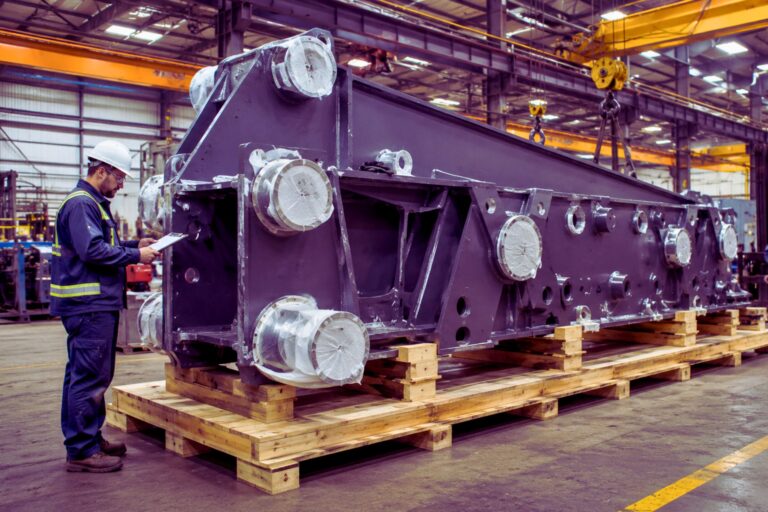
Producing the first acceptable component is an important milestone in any heavy fabrication project. It confirms that the design can be interpreted, the manufacturing route is technically feasible, and the required result can be achieved under actual production conditions.
However, the first-off component does not automatically prove that the same outcome can be reproduced efficiently across later units, new batches, different shifts, or changing production conditions. The initial part may depend on additional supervision, temporary adjustments, experienced individuals, repeated measurements, or corrections that are not yet reflected in the standard workflow.
For OEM customers, the real value of a fabrication partner becomes clearer when the supplier can convert the knowledge gained from the first component into a controlled and repeatable production process. This requires more than repeating the same operations. It requires stabilising the decisions, references, inspection points, documentation, and responsibilities that produced the acceptable result.
1) What the first-off component actually proves
A first-off component demonstrates that the part can be manufactured, but it also acts as a practical test of the production assumptions behind the drawing and process plan.
During the first execution, teams may discover:
- unclear drawing details
- unexpected fit-up conditions
- insufficient machining allowance
- distortion-sensitive areas
- difficult welding access
- unsuitable operation sequencing
- inspection points that are defined too late
- fixture limitations
- handling constraints
- differences between nominal and actual material behaviour
These findings are valuable because they reveal how the design interacts with real fabrication conditions. The first component should therefore be treated not only as a product to be accepted, but also as a source of process knowledge.
The critical question is what happens to that knowledge afterward. If the lessons remain only with the people who produced the first part, the next unit may repeat the same problems. If the findings are reviewed, documented, and integrated into the workflow, they become the foundation of process stability.
2) Moving from individual expertise to a controlled method
Heavy fabrication depends significantly on practical experience. Skilled welders, fitters, machinists, inspectors, and supervisors often identify issues that are not obvious from drawings or standard instructions.
This experience is essential, but a repeatable process cannot rely entirely on individual memory. If the correct result depends on one person knowing where to compensate, how to sequence the welds, or when to stop for measurement, the process remains vulnerable.
Building process stability means converting practical knowledge into controlled production information. Depending on the job, this may include:
- updated routing or traveller documents
- defined fit-up conditions
- clearer weld sequence instructions
- fixture settings or locating references
- agreed machining datums
- identified inspection checkpoints
- photographs of critical setups
- documented handling requirements
- clarified acceptance criteria
The goal is not to replace expertise with paperwork. The goal is to ensure that critical knowledge remains available and usable when the component is produced again.
3) Establishing a reliable production baseline
Repeat production requires a clear baseline that defines what is being reproduced. Without one, each new unit risks becoming a separate interpretation of the same project.
A stable baseline may include:
- approved drawing revisions
- current bills of materials
- confirmed material specifications
- defined welding and fabrication requirements
- agreed inspection criteria
- machining allowances and datum references
- accepted deviations or customer concessions
- packaging and delivery requirements
- records from the approved first-off component
This baseline should reflect the actual accepted configuration, not only the original production package. If the first component required an approved modification or clarified interpretation, that information must be incorporated into the controlled documentation before repeat production begins.
Otherwise, later units may be produced according to outdated instructions while the first component was accepted under different practical conditions.
4) Why fixtures and setup conditions must be reproducible
Fixtures, supports, clamps, locating points, and temporary restraints strongly influence the geometry of welded assemblies. If their use varies between units, dimensional results may also vary.
A repeatable setup should define more than the existence of a fixture. It should also clarify:
- where the component is located
- which surfaces establish the primary reference
- how parts are restrained
- the order in which clamps are applied
- when temporary supports are released
- which dimensions are checked before welding
- how fixture wear or damage is identified
Informal adjustments may work during first-off production, especially when experienced personnel are closely involved. In repeat production, however, undocumented setup changes can introduce variation between units.
Fixture control is therefore part of process control. The fixture must help reproduce the required relationships between parts, not simply hold them in place.
5) Stabilising fit-up, welding sequence, and heat input
Welding is one of the main sources of variation in heavy fabrication. Fit-up conditions, weld size, sequence, restraint, and heat distribution all affect the final geometry.
The first component often provides important information about:
- where shrinkage occurs
- which areas are sensitive to angular movement
- whether the planned sequence is balanced
- when intermediate measurements are needed
- how the structure behaves after restraints are released
- whether machining allowances remain sufficient
For repeat production, these findings should influence the standard manufacturing approach. A defined welding sequence, consistent fit-up criteria, and controlled inspection points can reduce variation between units.
This does not mean every component will behave identically. Material, ambient conditions, and production circumstances can still introduce differences. The objective is to reduce avoidable variation and detect developing problems before they affect the final interface.
6) Managing material variation between batches
Even when the specified material grade remains the same, later batches may not behave exactly like the material used for the first component. Differences in plate thickness, flatness, residual stress, surface condition, or dimensional variation can affect cutting, fit-up, welding, and machining.
A stable process should therefore distinguish between fixed process requirements and conditions that must be verified for each batch.
Useful controls may include:
- incoming material verification
- confirmation of material identity
- checks of critical thickness or flatness conditions
- review of material certificates where required
- monitoring of fit-up changes caused by dimensional variation
- confirmation that machining allowance remains adequate
Repeatability does not mean assuming that every input is identical. It means maintaining control when normal input variation occurs.
7) Using inspection feedback to improve the production process
Inspection should not function only as a final acceptance activity. In repeat production, inspection results can provide valuable information about process stability.
If several units show similar dimensional movement, surface issues, alignment trends, or repeated corrections, this may indicate that the production method needs adjustment.
Useful review questions include:
- Are the same dimensions repeatedly approaching tolerance limits?
- Are corrections required at the same production stage?
- Is one fixture or setup producing more variation than another?
- Are deviations linked to a particular sequence or batch?
- Are inspection results consistent across shifts and operators?
- Are the selected checkpoints early enough to support correction?
The purpose of this review is not only to identify nonconforming parts. It is to understand whether the process is drifting and whether preventive action is needed.
Over time, inspection data can help refine fixtures, sequences, allowances, and control points. This turns quality records into practical production knowledge.
8) Controlling engineering changes between production runs
Repeat production rarely takes place in a completely static environment. OEM customers may revise drawings, change materials, modify interfaces, or introduce updated acceptance criteria between batches.
A small engineering change can affect several connected areas of the process. A revised hole position may influence machining, inspection, fixture design, and assembly. A material change may affect welding behaviour or distortion. A modified interface may require new datums or machining allowances.
Before repeat production resumes, changes should be reviewed for their wider production impact.
The review should confirm:
- which documents have changed
- which fixtures or programmes are affected
- whether welding instructions require revision
- whether previous inspection results remain relevant
- whether new risks have been introduced
- whether customer approval is required for related adjustments
Without controlled change management, a stable process can quickly become unstable because different parts of the organisation are working from different assumptions.
9) What OEMs expect before increasing order volume
Before awarding repeat work or increasing production volume, OEM customers usually want confidence that the supplier can maintain the accepted result without depending on exceptional effort.
They may look for evidence that:
- the approved configuration is clearly documented
- lessons from the first component have been incorporated
- fixtures and setups are reproducible
- critical interfaces are controlled consistently
- inspection results demonstrate stable performance
- deviations are identified and managed systematically
- engineering changes are reflected in production
- delivery performance can be maintained as volume grows
The first component establishes technical credibility. Repeatable execution establishes operational credibility.
For OEMs, this distinction matters because higher volumes increase the consequences of process instability. A problem affecting one first-off component may be manageable. The same problem repeated across several units can create significant cost, delay, and supply chain disruption.
10) Practical steps for building process stability
Process stability is usually achieved through a series of practical improvements rather than one major system change.
Useful steps may include:
- conducting a structured review after the first-off component
- recording temporary corrections and successful adjustments
- updating production documents before the next unit
- confirming critical datums and interfaces
- standardising fixtures and setup conditions
- defining consistent welding and inspection sequences
- monitoring recurring dimensional trends
- linking nonconformities to corrective actions
- reviewing the effect of material and drawing changes
- comparing results across multiple units
- assigning responsibility for maintaining the production baseline
The most important principle is that learning should become part of the process. If each new component starts from the same uncertainties as the first, repeat production has not yet become stable.
A practical conclusion
A successful first-off component proves that a part can be manufactured. Stable repeat production proves that the manufacturing process is understood, controlled, and capable of delivering the required result consistently.
In heavy fabrication, this depends on more than repeating the same sequence of operations. It requires a controlled baseline, reproducible setups, disciplined welding and inspection, effective change management, and systematic use of production feedback.
At SL Industries, we focus on practical manufacturing discipline across fabrication, welding, machining, inspection, and production coordination to support repeatable quality and reliable execution in demanding industrial projects.
E-mail: info@sl-industries.com