A cautious recovery, but a more demanding operating environment
The first months of 2026 show a manufacturing environment that is improving in some areas, but remains difficult to predict. European industrial production has shown short-term recovery signals, while producer prices, input costs, steel market pressure, and supply chain delays continue to affect planning reliability. For companies working in heavy fabrication, welding, machining, and outsourced manufacturing, this is an important combination.
The practical message is clear: competitiveness in 2026 is not only about available capacity. It is increasingly about controlled execution, material discipline, process traceability, inspection readiness, and the ability to support OEM customers with reliable production records. In this environment, fabrication partners are judged not only by what they can manufacture, but by how consistently and transparently they can deliver it.
1) European manufacturing is recovering unevenly
Eurostat data for March 2026 shows that industrial production increased by 0.2% in the euro area and by 0.8% in the EU compared with February. At the same time, compared with March 2025, industrial production was still down by 2.1% in the euro area and by 1.0% in the EU. This is not a simple growth story. It is a cautious recovery in an environment where many manufacturers still need to manage unstable demand, cost pressure, and shifting order patterns.
The detailed picture is relevant for fabrication suppliers. In March 2026, capital goods increased by 1.1% in the euro area and by 1.2% in the EU month on month. This is significant because capital goods are closely connected to machinery, equipment, industrial components, transport systems, and investment-driven manufacturing activity. However, the annual decline in overall industrial production shows that companies still need to protect margins and avoid operational waste.
The S&P Global Eurozone Manufacturing PMI also points to a mixed picture. In May 2026, the index fell from 52.2 in April to 51.6, still indicating expansion, but with weaker momentum. Input costs rose at the steepest rate since May 2022, output charge inflation reached a three-and-a-half-year high, and suppliers’ delivery delays were the worst since June 2022.
For fabrication companies, this means that internal control matters more. When external conditions are uncertain, manufacturers cannot rely only on volume recovery. They need stronger planning, clearer documentation, better inspection discipline, and faster identification of risks before they become rework or delivery delays.
2) Cost pressure makes rework more expensive
Industrial producer prices increased by 0.6% in the euro area and by 0.7% in the EU in April 2026 compared with March. Compared with April 2025, prices were up by 4.9% in both the euro area and the EU. Intermediate goods rose by 3.9% in the euro area and 3.7% in the EU year on year, while energy prices rose by 12.3% and 12.6% respectively.
For heavy fabrication, this has a direct practical impact. Steel, energy, consumables, subcontracted operations, logistics, machining time, and surface treatment all contribute to the final cost of a fabricated component. When prices move upward, avoidable defects become more damaging. A dimensional issue discovered after welding, machining, or coating is no longer just a quality problem. It becomes a cost, capacity, and delivery problem.
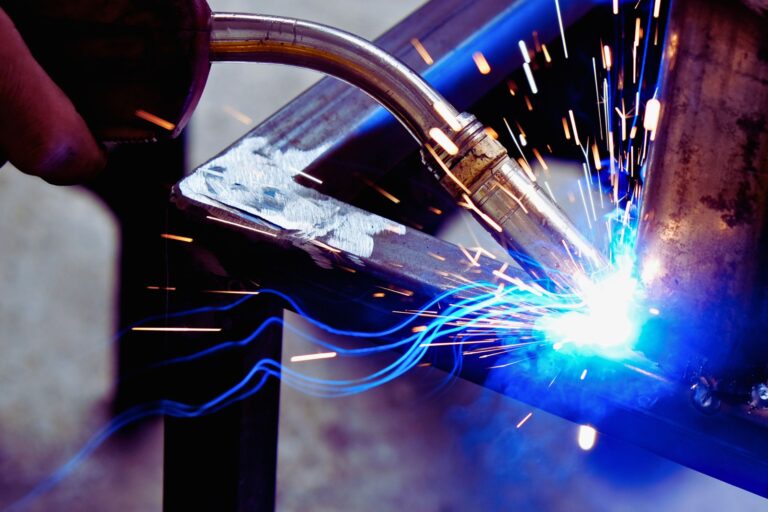
This makes inspection planning, weld traceability, distortion control, and accurate production records more valuable. They reduce the probability of late-stage surprises and help teams identify where a problem originated if something goes wrong. In a higher-cost environment, the ability to prevent rework is a competitive advantage.
3) Steel and metals remain strategic, but supply conditions are changing
The steel market remains one of the strongest signals for heavy fabrication. World Steel Association expects demand in the EU plus United Kingdom region to grow by 1.3% in 2026 and by 3.0% in 2027. The expected recovery is linked to increased infrastructure and defence spending, as well as gradual macroeconomic improvement. However, worldsteel also notes that Europe’s exposure to energy price spikes remains a significant downside risk for 2026.
For OEM suppliers, this is a practical warning. Material availability and price will continue to require attention. The issue is not only whether steel demand grows. The issue is whether fabrication companies can manage material origin, grade, certification, nesting, cutting losses, weldability, and traceability in a disciplined way.
The EU is also tightening its steel import regime. In May 2026, EU lawmakers backed measures to reduce tariff-free steel imports by 47% from 2024 levels to 18.3 million tonnes per year, with a 50% tariff applying above that level. The measures also introduce stricter “melt and pour” traceability rules to determine the original source of steel and avoid circumvention.
This matters for fabrication partners because material traceability is moving from a quality preference to a broader commercial and regulatory expectation. OEMs increasingly need confidence not only in the finished part, but also in the evidence behind the material, process, and production route.
4) European industrial policy is shifting toward strategic manufacturing capacity
The European Commission’s Industrial Accelerator Act proposal, published in March 2026, aims to strengthen EU competitiveness and industrial resilience. The proposal includes an objective to increase manufacturing’s share of EU GDP to 20% by 2035.
For companies involved in outsourced manufacturing, fabrication, machining, welding, and assembly, this signals a broader shift. Industrial capacity is being discussed not only as a cost factor, but as a strategic asset. Local and regional manufacturing capability, reliable supply chains, documentation readiness, and production resilience are likely to carry more weight in customer decisions and public policy.
This does not mean that every supplier will benefit automatically. It means that the most trusted suppliers will be those that can demonstrate control: controlled welding procedures, reliable inspection routines, traceable records, repeatable production, and credible communication with OEM customers.
5) Transport, construction equipment, and heavy machinery show selective momentum
The commercial vehicle market started 2026 positively in the EU. ACEA reported that new van registrations grew by 2.3%, truck registrations by 10.7%, and bus registrations by 24.5% in the first quarter of 2026. Heavy-truck registrations were a major driver of truck growth, increasing by 12.6%.
This is relevant for suppliers of fabricated structures, welded components, machined parts, and assemblies because commercial vehicles and heavy equipment have broad industrial supply chains. Even moderate recovery in these segments can increase demand for reliable fabrication partners capable of handling variation, documentation requirements, and delivery pressure.
The construction equipment sector is also stabilising. CECE reported that after reaching a low point in 2025, the European construction equipment market was stabilising, with single-digit growth in 2026 described as a realistic outlook. The organisation also noted that moderate growth prospects are emerging, provided that suitable economic and political framework conditions are in place.
For companies such as SL Industries, whose services include machining medium to large components for heavy equipment, construction machines, large crane parts, and port equipment components, these market signals are directly relevant. The opportunity is not simply “more demand.” It is demand for suppliers that can manage large, complex, and technically controlled work with reliable execution.
6) Fabrication resilience now includes the ability to prove control
OEMs are placing stronger emphasis on traceability, documentation, inspection planning, and supplier qualification. This is partly driven by cost pressure and supply chain uncertainty, but also by the complexity of modern industrial products. Large welded structures, machined assemblies, crane parts, and equipment components require more than workmanship. They require proof that production was controlled.
This is why production records are becoming more important in heavy fabrication. Material certificates, drawing revisions, weld maps, inspection reports, nonconformance records, repair documentation, and final release packages are not just administrative requirements. They help OEMs understand what was made, how it was made, and whether the required controls were applied.
In this sense, documentation is part of operational resilience. A supplier that can retrieve clear records, explain deviations, and demonstrate process control reduces uncertainty for the customer. This becomes especially valuable when projects involve high-value components, tight delivery windows, or repeated production.
7) Automation and digitalization are becoming practical, but discipline remains the foundation
HANNOVER MESSE 2026 placed strong emphasis on the interaction between AI, automation, digitalization, energy systems, and applied research as drivers of sustainable competitiveness. The organisers also highlighted industrial AI as a tool for real-time data analysis, process optimization, and adaptive control of production workflows.
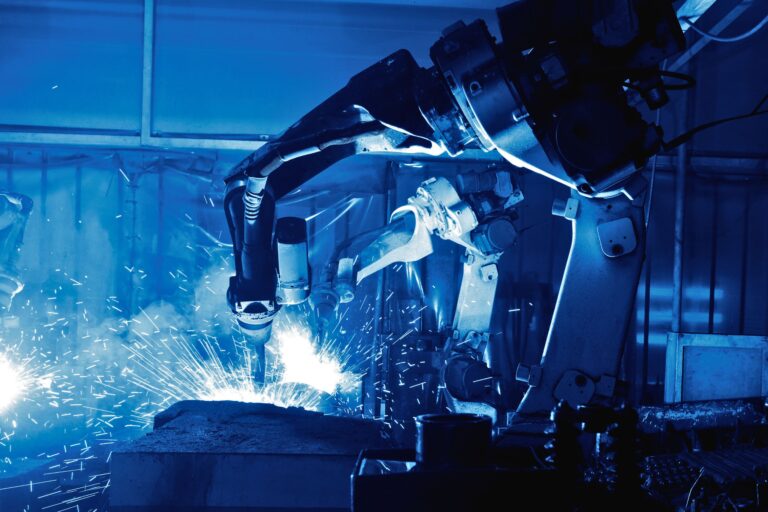
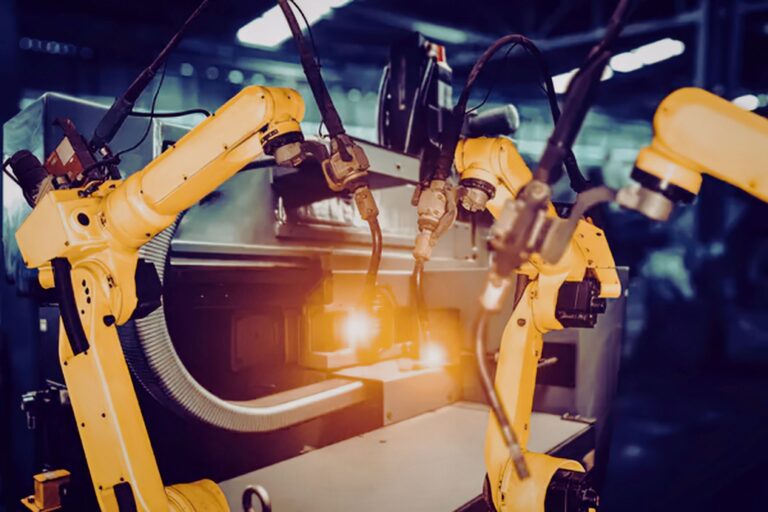
For fabrication companies, the lesson is not that every process should immediately become highly digital or AI-driven. The more practical conclusion is that manufacturing data, process discipline, and equipment capability are becoming more connected. Robotic welding, part identification, inspection records, production planning, and documentation systems all contribute to a stronger foundation for future digital improvements.
SL Industries’ current capabilities already reflect the importance of controlled production in heavy fabrication. The company’s official capability information refers to investment in employee training, certification, robotic welding equipment, documented welding techniques, and quality control procedures. It also lists welding equipment, robotic welding systems, large CNC machining centres, cutting, forming, shotblasting, painting, and material handling capacity.
The important point is not technology for its own sake. The real value comes when equipment, skilled people, procedures, inspection, and documentation work together to reduce variation and support reliable delivery.
What these developments mean for OEMs and fabrication partners
The industrial signals from early 2026 point to several practical conclusions for OEMs and their heavy fabrication suppliers.
First, manufacturing recovery remains fragile. Companies should prepare for changing demand rather than assuming stable growth. Flexible planning and transparent communication with customers will remain essential.
Second, cost pressure makes process control more valuable. Rework, scrap, excessive welding, late inspection, and unclear documentation have a stronger commercial impact when material and energy costs rise.
Third, material traceability is becoming more important. With steel markets under pressure and EU import rules tightening, customers will pay closer attention to material origin, certificates, and production records.
Fourth, large-component capability matters when it is supported by discipline. Capacity alone is not enough. OEMs increasingly want suppliers that can control welding, machining interfaces, inspection checkpoints, and final release documentation.
Fifth, automation should be practical. Robotic welding, digital records, part identification, and structured inspection can create measurable value when they address real production risks.
Sixth, supplier confidence is built through evidence. A finished component matters, but so do the records behind it. Traceability, inspection history, deviation handling, and documentation readiness are becoming part of how industrial customers evaluate supplier reliability.
Conclusion
The beginning of 2026 shows an industrial environment where cautious recovery and continued uncertainty exist at the same time. Steel demand is expected to improve gradually, commercial vehicles and construction equipment show selective momentum, and European industrial policy is placing renewed emphasis on strategic manufacturing capacity. At the same time, cost pressure, delivery delays, material traceability, and documentation expectations remain major concerns.
For heavy fabrication companies, the practical response is not only to expand capacity. It is to strengthen controlled execution: better planning, disciplined welding, dimensional control, inspection readiness, traceable documentation, and reliable communication with OEM customers.
At SL Industries, we focus on practical manufacturing discipline across engineering, fabrication, assembly, welding, machining, and service support for industrial customers. Our approach is aligned with the needs of OEMs that require not only manufactured components, but controlled processes, repeatable quality, and reliable production support.
E-mail: info@sl-industries.com
Sources used
- Eurostat: industrial production in the EU and euro area, March 2026. (European Commission)
- S&P Global: Eurozone Manufacturing PMI, May 2026. (pmi.spglobal.com)
- Eurostat: industrial producer prices, April 2026. (European Commission)
- World Steel Association: Short Range Outlook, April 2026. (worldsteel.org)
- Reuters: EU steel import quotas and tariff measures, May 2026. (Reuters)
- European Commission: Industrial Accelerator Act proposal, March 2026. (European Commission)
- ACEA: EU commercial vehicle registrations, Q1 2026. (acea.auto)
- CECE: European construction equipment market outlook, 2026. (cece.eu)
- HANNOVER MESSE: AI, automation, digitalization and industrial competitiveness, 2026. (https://www.hannovermesse.de)